If you are thinking about buying a rental in Kennesaw, the big question is simple: will the numbers and demand hold up for a small investor? That matters even more in a market where student demand, commuter demand, and new apartment supply all overlap. The good news is that Kennesaw has several solid demand drivers, but it is also a place where careful underwriting matters. Let’s break down what you should know before you buy.
Why Kennesaw draws renters
Kennesaw is not a one-note rental market. According to the U.S. Census Bureau’s quick facts for Kennesaw, the city had an estimated 37,740 residents in 2024, up 13.6% from 2020. That kind of population growth helps support ongoing housing demand.
The city also sits about 25 miles northwest of Atlanta along the I-75 and US 41 corridor. That location supports renters who want access to Kennesaw itself as well as a practical commute pattern. In other words, you are not relying on just one tenant profile.
KSU shapes the market
One of the biggest demand drivers is Kennesaw State University enrollment. KSU reported 51,375 enrolled students in fall 2025, including more than 9,300 first-year students and more than 5,300 graduate students. That creates a large pool of renters looking for housing near campus or within an easy drive.
At the same time, KSU has expanded its own housing options. The university lists 11 residence halls and more than 6,300 beds across both campuses, with additional capacity planned for fall 2026. That is important because it supports steady housing demand, but it also means investors should not assume every student renter must live off campus.
For small investors, the better takeaway is this: KSU supports demand not just from undergraduates, but also from graduate students, parents helping students secure housing, university staff, and people who want to live near campus amenities.
Commuters and local workers matter too
Kennesaw also benefits from a broader employment base. The city’s community profile points to employers in manufacturing, technology, healthcare, and retail, along with strong transportation access. The city’s 2024 annual report also noted 3% unemployment and continued expansion among distribution and logistics employers.
That broader base helps reduce reliance on student demand alone. If you are considering a townhome or single-family rental, that matters because your likely renter may be a commuter household, a local employee, or someone relocating within Cobb County rather than only a student tenant.
Rent levels in Kennesaw
Rent data in Kennesaw needs to be read carefully because different sources measure different things. As of April 2026, Zillow Rental Manager market trends for Kennesaw showed an average asking rent of $2,290 across 216 available rentals, while Zillow’s separate housing market estimate showed an average rent of $1,809. The Census Bureau reported median gross rent of $1,845.
The best way to use those numbers is as a range, not as one exact citywide rent figure. For investors, that means your actual rent target should depend heavily on property type, condition, bedroom count, and location.
Typical rent signals by unit size
| Unit type | Typical monthly rent signal |
|---|---|
| Studio | ~$1,811 |
| 1-bedroom | ~$1,381 |
| 2-bedroom | ~$1,745 |
| 3-bedroom | ~$2,295 |
| 4-bedroom | ~$2,841 |
These figures suggest that larger homes and townhomes can produce stronger monthly rent, but they also come with higher acquisition costs and operating exposure. A small investor should focus less on headline rent and more on whether the property can stay competitive in its specific segment.
Property types small investors should watch
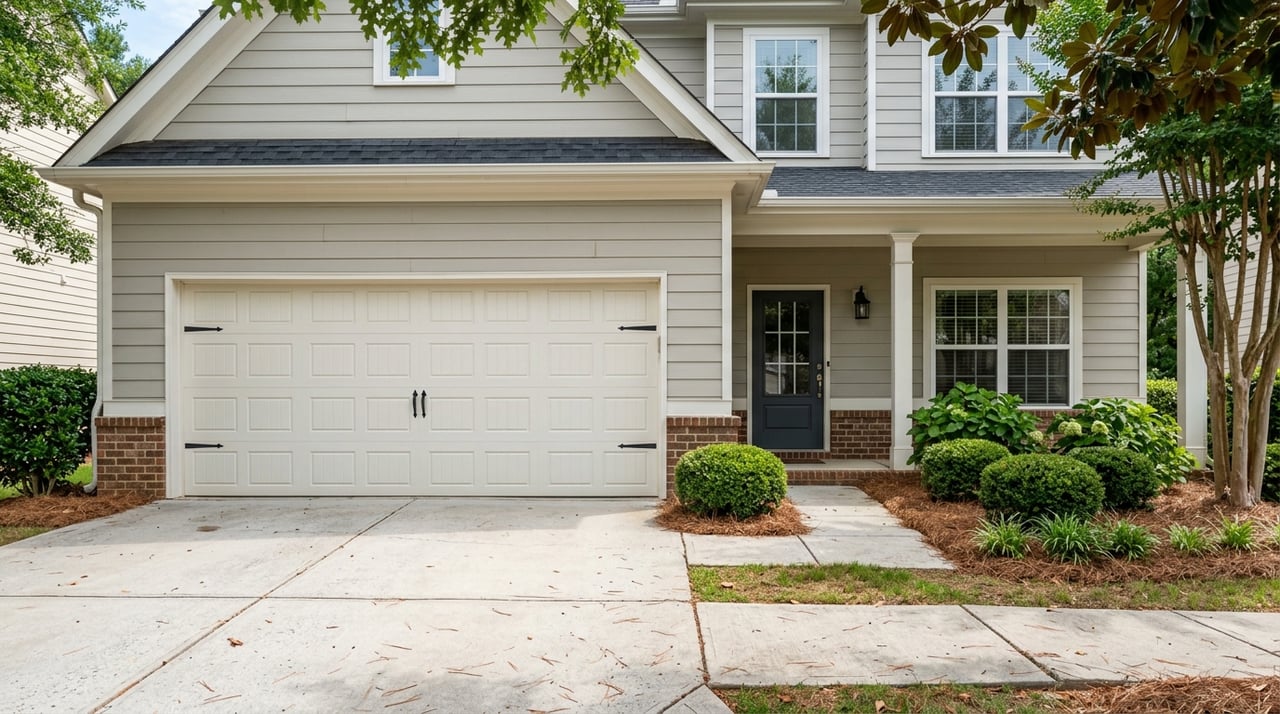
Kennesaw appears to work best as a hybrid market. Near campus, apartments and student-oriented housing are common. Beyond that, townhomes and single-family homes fit the city’s suburban renter base well.
That pattern lines up with local development and housing options. KSU’s own housing inventory includes apartments, premium apartments, suite-style communities, and traditional housing, while the city’s 2024 annual report noted more than 1,200 new apartment units delivered in 2024, along with new apartment and townhome projects.
For many small investors, that creates an important distinction:
- Apartments may face more direct competition from new supply
- Townhomes can appeal to both commuters and student-adjacent renters
- Single-family homes may attract renters looking for more space and longer stays
In practical terms, well-located homes and townhomes may offer a more balanced path if you want to serve a wider renter pool.
What cash flow may look like
Kennesaw can work as a rental market, but it is not a market where you should expect easy cash flow just because demand exists. Based on Zillow data, a simple gross-rent check using the city’s $1,809 average rent and average home value of $403,299 works out to a rough 5.4% gross yield before financing and operating costs.
That is a useful starting point, but it is not your final answer. You still need to account for taxes, insurance, maintenance, turnover, vacancy, possible HOA costs, and financing terms.
The Census data adds another reality check. Median monthly owner costs with a mortgage were $1,901, compared with median gross rent of $1,845. That does not mean rentals cannot work. It means your purchase price, loan structure, and renovation scope are likely to make or break the deal.
Why underwriting matters more here
Kennesaw is not deeply discounted. Zillow reports a median sale price of $383,667, with 371 homes for sale and homes going pending in about 39 days. For small investors, that means you should underwrite based on today’s pricing and not assume you will find a bargain that fixes every margin issue.
This is especially important if you are comparing properties that need work versus those that are rent-ready. In a market with tighter cash-flow math, a property that can lease quickly and compete on condition may outperform a cheaper property that requires more capital and more downtime.
Risks to keep in mind
Every market has tradeoffs, and Kennesaw is no exception. The biggest risk factors here are tied to supply, rent assumptions, and leasing patterns.
New apartment supply
The city’s 2024 annual report says more than 1,200 apartment units were delivered in 2024, and citywide multifamily vacancy reached 23%. That can put pressure on rents, specials, and lease-up time, especially for apartment-style investments competing directly with newer product.
Confusing rent metrics
Kennesaw’s rent data does not point to one perfect number. Zillow’s asking-rent trends, Zillow’s broader rent estimate, and the Census median gross rent all differ. If you use only the highest number to make your deal work, you may be setting yourself up for disappointment.
Student leasing seasonality
KSU is a strong long-term demand driver, but student-oriented demand is often more calendar-driven than a standard suburban lease cycle. If your property depends heavily on student renters, timing and marketing strategy become more important.
A practical approach for small investors
If you are exploring your first or next rental in Kennesaw, a practical strategy is to stay focused on flexibility. Properties that appeal to more than one renter type often provide more resilience if market conditions shift.
That may include:
- Townhomes with easy access to major roads and campus areas
- Single-family homes that offer functional space for longer-term renters
- Rent-ready properties that can compete on condition and convenience
- Purchase prices that still leave room for maintenance, vacancy, and realistic returns
The goal is not to chase the highest theoretical rent. The goal is to buy a property that can perform under real-world conditions.
The bottom line on Kennesaw rentals
Kennesaw stands out as a student-plus-commuter rental market with multiple demand drivers. Kennesaw State University, access along I-75 and US 41, population growth, and a broad local employment base all support renter demand. At the same time, new apartment supply and relatively firm home prices mean small investors need disciplined numbers and a clear plan.
If you want help thinking through Kennesaw investment opportunities, neighborhood fit, or resale potential before you buy, Southern Swann, LLC offers calm, local guidance tailored to your goals.
FAQs
What makes the Kennesaw rental market attractive for small investors?
- Kennesaw benefits from multiple demand drivers, including Kennesaw State University, population growth, commuter access along I-75 and US 41, and a broader local employment base.
What are typical rent levels for rentals in Kennesaw?
- As of April 2026, Zillow showed average asking rent around $2,290, while other rent measures were closer to $1,809 to $1,845, so it is best to treat rent levels as a range based on property type and condition.
Are single-family homes or apartments better rentals in Kennesaw?
- For many small investors, single-family homes and townhomes may offer more flexibility because they can appeal to commuters, local workers, and student-adjacent renters, while apartments may face more pressure from new supply.
What are the biggest risks in the Kennesaw rental market?
- The key risks include new apartment supply, citywide multifamily vacancy, using overly optimistic rent assumptions, and seasonality if a property depends heavily on student renters.
Is Kennesaw a strong cash-flow market for rental investors?
- Kennesaw can work, but cash flow is often tight enough that purchase price, financing, repairs, and ongoing expenses matter a lot more than headline rent alone.