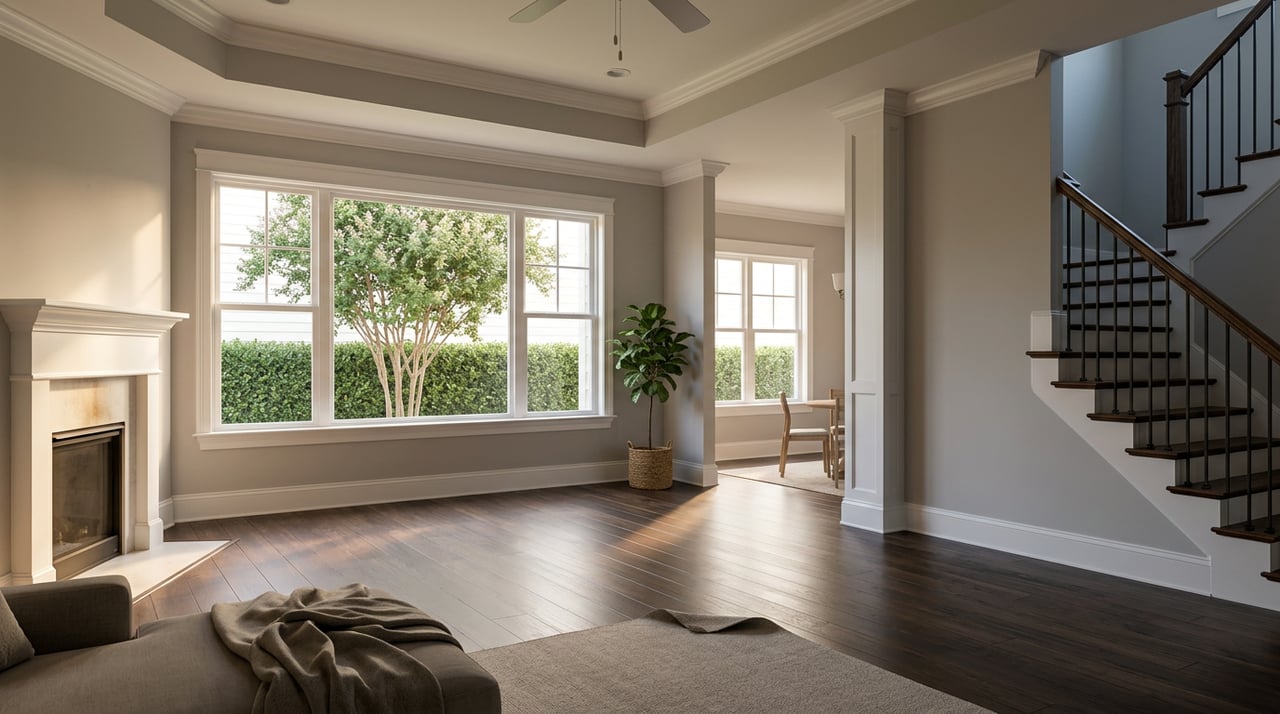
If you have been watching East Cobb home prices with an eye toward downsizing, you have probably heard some version of good news. Homes are sitting longer. Sellers are cutting prices. The frenzy of a few years ago has given way to something calmer, and calmer usually means more room to negotiate.
That is true, as far as it goes. But it describes one market, not the one most downsizers actually shop in. Search for the kind of home most East Cobb empty nesters say they want, single level, low maintenance, gated, built for a smaller footprint, and you run into a different problem entirely. There is nothing to buy.
Take Longleaf Village Green at East Cobb, a gated 55 and older community of cottage style homes off East Piedmont Road near Sandy Plains Road. As of this writing, it has zero homes listed for sale. Not a slow month. Zero.
The Market You Keep Hearing About
The softening is real. Across East Cobb, the median sale price for single family homes stood at $503,000 in November 2025, with homes taking roughly 40 days to sell on average, a slower pace than the bidding wars of 2021 and 2022. Local market analysts covering Cobb County have described the same pattern in plain terms this year: homes that once sold in days now sit longer and often need a price adjustment before they move.
For a homeowner preparing to sell a large four or five bedroom house, this is useful context. You are likely to need patience, a sharper price, and possibly some negotiation on repairs or closing costs. None of that is bad news for a seller with equity and no urgent deadline. It just means the transaction takes longer and rewards preparation over speed.
The Market Nobody Mentions
Here is where the story splits. The homes that soften first in a cooling market tend to be the larger, higher maintenance properties, the ones with more square footage to heat, more yard to manage, more roof to eventually replace. Smaller, single level, low maintenance product does not behave the same way, because there is so little of it and almost none of it turns over.
Village Green was built out between 2015 and 2018. There are 69 homes in the community, and that number is fixed. No new phases, no additional land to develop within the gates. The homes are English cottage style, sized between roughly 2,275 and 4,200 square feet depending on the floor plan, with two bedrooms and two full baths on the main level and a finished bonus area upstairs. The community's own HOA covers lawn and landscape maintenance, street and driveway upkeep, trash removal, and, notably, roof maintenance and exterior painting on a scheduled basis.
That last detail matters more than it sounds. In a standard single family neighborhood, a new roof is a five figure surprise you budget for once every couple of decades. Here, it is folded into a predictable monthly obligation instead of an unpredictable large one. For a downsizer trying to plan a fixed income around housing costs, that shift from occasional large bills to steady small ones is often the whole point.
There is also a rule that quietly limits supply further: no rentals or leasing. Every home has to be owner occupied, which means the community never accumulates the churn you would expect from investor turnover. Combined with a capped unit count, the result is a segment of the market that does not loosen just because the broader county has.
What the Numbers Actually Compare To
It is tempting to look at Village Green's advertised starting prices in the $400s alongside a floor plan of about 2,915 square feet and conclude the per square foot cost is a bargain next to East Cobb's broader single family median of roughly $205 per square foot. Run the math on the entry price and this plan and you land closer to $137 per square foot, well under that broader figure.
But that comparison leaves out the parts of ownership that do not show up in a purchase price.
| Typical East Cobb resale (single family) | Village Green cottage (~2,915 sq ft) | |
|---|---|---|
| Approximate price | $503,000 median (Nov. 2025) | Starting in the $400s |
| Approximate size | Varies widely | ~2,915 sq ft |
| Approx. price per sq ft (Nov. 2025) | ~$205 | ~$137 |
| Monthly HOA | Varies by subdivision | $260 to $300 |
| Average annual property tax | Varies by home and district | About $3,116 |
| Major repairs (roof, exterior paint) | Owner's responsibility, out of pocket | Scheduled and covered by HOA |
Add the HOA dues and average tax bill together and a Village Green owner is carrying roughly $520 to $560 a month in fixed costs before a single utility bill arrives. That number will look larger on a spreadsheet than most people expect from a smaller home. It is also doing a job that a resale single family owner is doing too, just less visibly, through irregular checks written to roofers, painters, and lawn crews over the years instead of a level monthly line item.
Neither structure is better in the abstract. The point is that a lower price per square foot is not, by itself, evidence of a better deal. It is evidence of a different way the same costs get organized.
The Name on the Sign Is Not Always the Address on the Deed
One more wrinkle worth knowing before you start touring 55 and older communities in the area: several developments carry the East Cobb name without sitting inside East Cobb's boundaries. Brookhaven of East Cobb, for example, a separate 98 home attached community built by Jim Chapman Communities, is addressed in Kennesaw, not in unincorporated East Cobb.
That distinction affects which municipal tax jurisdiction and services apply to the property, since East Cobb itself is unincorporated Cobb County while Kennesaw is its own city. It is a reasonable thing to confirm before assuming a community's marketing name tells you everything about where it actually sits. A five minute check of the county tax parcel or a direct question to the HOA answers it cleanly, and it is worth asking before you fall for a floor plan.
Planning Around Two Markets at Once
The practical challenge for anyone downsizing out of a larger East Cobb home is that you are effectively operating in two markets on two different clocks. Your current home is entering a slower selling environment where patience and pricing discipline matter. Your target home, if it looks anything like Village Green, may have no inventory at all the week you are ready to buy.
That mismatch is exactly why timing a downsizing move benefits from someone tracking both sides at once, watching for the rare listing in a capped community while managing a patient, well priced sale on the home you are leaving. Lisa Swann's Downsize Smart, Live Well program was built around that specific coordination problem: one point of contact managing the staging, the sale timeline, the search for scarce low maintenance inventory, and the logistics of the move itself, so the two clocks do not end up working against each other.
A Few Questions Worth Asking Before You Start Touring
If Village Green has nothing listed, are there similar options nearby? The same builder, Longleaf Communities, has built comparable 55 and older cottage communities in West Cobb and in Woodstock. They sit outside East Cobb's boundaries, so they will not carry the same address, but the floor plans and HOA structure follow a similar pattern.
Does a lower price per square foot always mean a better deal? Not on its own. As the comparison above shows, a smaller home with a lower per square foot cost can still carry higher fixed monthly costs once HOA dues and taxes are counted, and those dues are often paying for repairs a single family owner would otherwise budget for separately.
Why does a no-rental rule matter to a buyer, not just an investor? It keeps the community owner occupied and limits the kind of turnover that comes from short term tenants. For many downsizers, that stability is part of the appeal. It also means fewer homes hit the market at any given time, since owners are not cycling properties in and out as rentals.
If you are weighing a move like this and want a clearer read on what is actually available, and what it would take to sell your current home in today's timeline, SoldBySwann offers a free consultation to walk through both sides of the plan together. Reach out and let's map out what downsizing looks like for your specific home and timeline.
This article is general information, not legal, tax or financial advice. Consult a qualified professional about your situation.